 (opens in a new tab)
Westworld of Warcraft
A private server where the world plays itself.
Sep 14, 2026 – Oct 5, 2026, 4 posts
Origin
I wanted a project where I could use machine learning and natural language processing. While I was mulling over project ideas and watching Westworld, a friend sent me a link to the WoW Classic announcement. That gave me the idea for Westworld of Warcraft.
What I wanted Westworld of Warcraft to be was a private server where there were other “players” that would be involved with the gameplay. Back in 2005, I remember playing with a number of memorable players each with personality quirks; an experience I hope to emulate with different hosts.
Goals
So here are the goals of the project (I will update them as I go):
Create programs that can interact with the game and consume generated data from the game.(Completed)Funnel consumed data to instances into Microsoft Azure.(Completed)- Build machine learning models around the consumed data to mimic players playing the game. Including:
- Questing
- PVP
- Raiding
- Grouping
- Being Apart of the Economy
- Build natural language processing models to:
- Allow bots to converse with players
- Spawn bots in response to continuing chat requests (LFG,LFM,WTS,etc.)
Change the bots to no longer need the client and use the server connection directly(Completed)
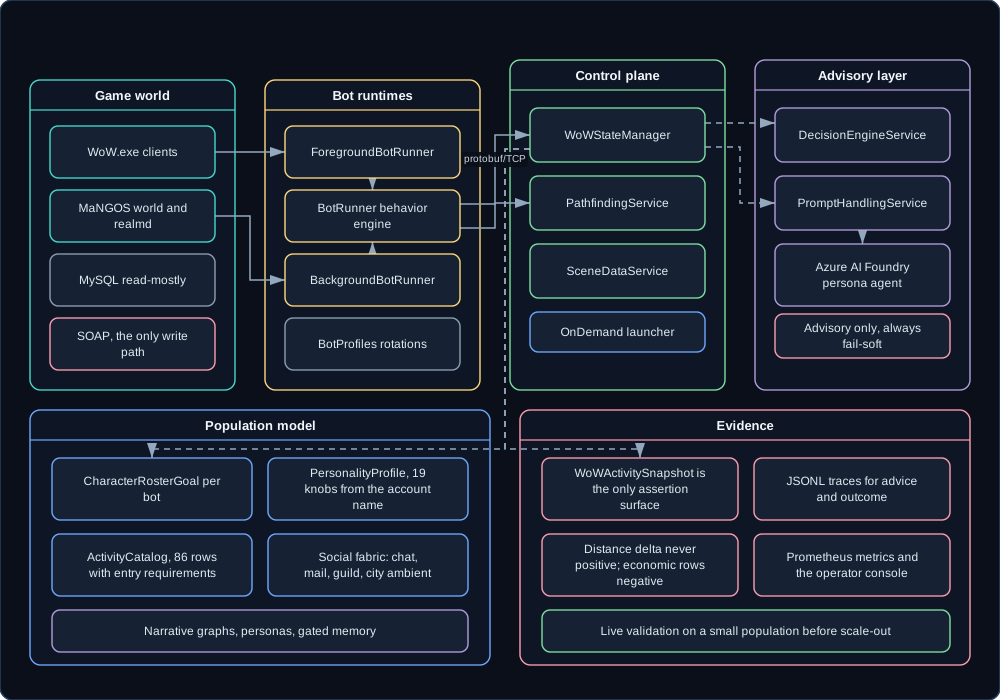
Where those goals ended up: bots now run in two interchangeable modes - injected into a real game client for parity, or fully headless against a C# implementation of the game protocol. Behavior is structured as a four-layer hierarchy, objective sequences are generated at runtime from the world database rather than scripted, and every character carries a personality derived deterministically from its account name. Machine learning and the persona dialogue runtime are both advisory: they break ties and draft text, and neither can choose an action or touch the world.
The series is still being written, so only the published parts are listed below, newest last. Print every published part in one page: Westworld of Warcraft series (print) (print to PDF).